What Are Neuroadaptive Interfaces?
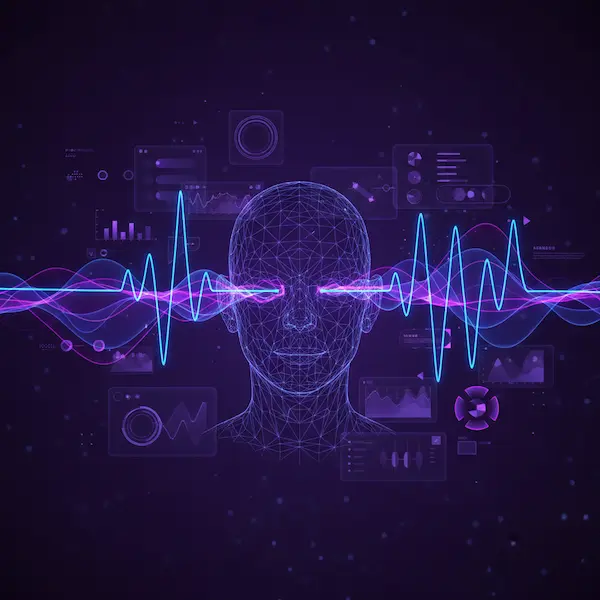
Neuroadaptive interfaces are systems designed to adjust their behavior based on implicit monitoring and analysis of a user’s brain activity and physiological signals. Unlike traditional interfaces that rely solely on explicit commands, these systems interpret cognitive and affective states in real-time, enabling continuous, implicit adaptation tailored to the user's mental and emotional context.
This approach is grounded in passive brain-computer interface (BCI) technology combined with sophisticated algorithms trained to decode mental states from multi-channel EEG data. The resulting Multi-Dimensional Mental State (MDMS) representation offers a comprehensive insight into the user's psychological condition that can be integrated into the human-computer interaction loop.
The Science Behind Neuroadaptive Systems
At the core of neuroadaptive technology lie:
- Advanced EEG sensors - lightweight, mobile, and non-invasive sensors capable of continuous brain activity monitoring without disrupting natural behavior.
- Machine learning algorithms - pre-trained classifiers that decode neural signals into interpretable mental states reflective of cognitive processes like attention, workload, and motivation.
- Real-time adaptation engines - software frameworks enabling dynamic interface modifications or AI behavior adjustments based on decoded neural data, fostering interaction that anticipates and supports user needs seamlessly.
Enhanced user experience
Neuroadaptive interfaces provide radically improved usability by:
- Reducing Cognitive Load - by adapting content complexity and interface demands based on user mental fatigue or stress, reducing errors and navigation time.
- Personalization - dynamically tailoring user interfaces to suit individual preferences and cognitive states, increasing engagement and satisfaction.
- Accessibility - enabling users with physical or cognitive impairments to interact more naturally with technology through brain-driven control or feedback.
High-stakes environments
These systems show promise in domains where human performance is critical:
- Aviation and transportation - monitoring pilot anxiety and workload to optimize information display and intervention timing.
- Healthcare - enhancing operator performance in surgical systems or monitoring mental health conditions through continuous cognitive state tracking.
- Military and defense - assisting soldier situational awareness while minimizing mental fatigue and cognitive overload.
AI and autonomous systems
Neuroadaptive technology creates a new communication layer between humans and AI by enabling machines to learn from human mental states continuously, enhancing AI reasoning and decision-making capabilities. This symbiotic relationship transforms autonomous systems into empathetic partners capable of adapting to human conditions holistically.
Challenges and ethical considerations
While neuroadaptive interfaces offer enormous potential, several challenges must be addressed:
- Privacy and data security - continuous monitoring of brain activity raises sensitive privacy concerns requiring robust, transparent data protection mechanisms.
- Algorithmic bias - ensuring fairness and accuracy across diverse populations with different cognitive and emotional profiles is critical.
- User consent and transparency - clear communication about system monitoring, adaptation behaviors, and data use is essential for ethical deployment.
- Usability and comfort - developing sensors and interfaces that are unobtrusive and comfortable for prolonged use is a significant engineering challenge1.
- https://www.sciencedirect.com/science/article/abs/pii/B9780128214138000063 ↩︎