
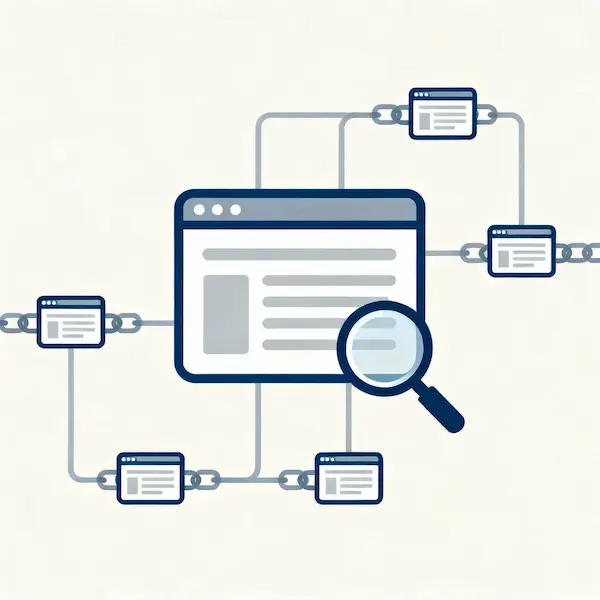
Understanding Semrush's backlink Intelligence Arsenal
Semrush's backlink ecosystem consists of multiple interconnected tools designed for different phases of competitive analysis. The Backlink Analytics tool serves as the primary intelligence hub, providing comprehensive domain-level insights including referring domains, anchor text distribution, and competitor overlap analysis.
The platform's Authority Score calculation employs eight weighted factors spanning three core categories. Link Power and Organic Traffic represent primary metrics, while six additional factors assess Natural Profile legitimacy: no organic SERP rankings, unnaturally high dofollow percentages, traffic-link imbalances, shared IP clustering, identical backlink profiles, and manipulation indicators.
Authority Scores follow a logarithmic scale from 0-100, making improvements increasingly difficult at higher levels. Moving from Authority Score 1 to 3 requires significantly less effort than progressing from 71 to 73, with hundreds of millions of websites scoring below 10 while only hundreds achieve scores approaching 100.
Real-world competitor discovery and analysis examples
Effective competitor identification transcends business relationships to focus on SERP competitors. Consider analyzing "coconut water brands" where your true SEO competitors include health blogs, recipe sites, and affiliate marketers ranking for your target keywords, not just beverage companies.
The Backlink Competitors feature in Semrush automatically identifies domains sharing the highest number of common referring domains with your site. For example, if analyzing Birchbox's strategy, the tool revealed beauty blogs, subscription box review sites, and lifestyle publications as primary link sources rather than direct beauty retailers.
Case Study Implementation: Zenni Optical used Semrush backlink intelligence to identify eyewear fashion blogs and health websites linking to competitors. By analyzing anchor text patterns and content types attracting links, they developed targeted content strategies that doubled organic traffic and revenue within 12 months.
Advanced backlink gap analysis with practical examples
The Backlink Gap tool enables simultaneous comparison of up to five competitor domains, categorizing opportunities into strategic segments. When comparing Office Depot against Best Buy, the analysis reveals electronics review sites, business equipment directories, and corporate partnership pages as untapped opportunities.
Step-by-Step Gap Analysis Workflow:
- Enter your domain plus 4 competitors (e.g., bestbuy.com, officedepot.com, staples.com, target.com)
- Filter for domains with Authority Score 40+ to prioritize high-value prospects
- Apply traffic filters (minimum 3-5K monthly visits) to eliminate spam sites
- Identify "Best" opportunities where 2+ competitors have links but you don't
- Export prospects with contact information for systematic outreach
The tool's interactive visualization displays referring domain overlap as colored segments. Light green shading indicates domains linking to competitors but missing from your profile, while darker green shows shared opportunities requiring differentiated outreach approaches.
Systematic link building campaign implementation
Semrush's Link Building Tool transforms competitive intelligence into executable campaigns through integrated prospect management and email automation. The workflow progresses through four distinct phases: Overview monitoring, Prospects identification, In Progress tracking, and Monitor analysis.
- Campaign configuration process - enter 10 target keywords (e.g., "business software," "office equipment," "workplace solutions") and 10 competitors. The system generates prospect lists based on sites linking to competitors for these terms while incorporating advanced search operators for refined targeting.
- Prospects tab - displays potential targets with Authority Scores, URL types, and relevance indicators. For B2B software campaigns, typical prospects include industry publications (Authority Score 60-80), business directories (40-60), and niche blogs (20-40), each requiring different outreach approaches.
- Email integration and templates - connect Gmail accounts directly within Semrush to streamline outreach without leaving the platform. Template categories include General outreach, Manual linking, Directory submissions, Guest posting, Product reviews, and Broken link replacement, each optimized for specific prospect types.
Authority score analysis and competitive benchmarking
Understanding Authority Score ranges provides crucial context for competitive analysis and target prioritization. Interpretation Guidelines:
- Low authority (0-20) - new websites or those lacking quality backlinks,
- Average authority (21-40) - established sites with basic backlink profiles,
- Good authority (41-60) - strong sites with substantial organic traffic,
- High authority (61-80) - industry leaders with comprehensive link profiles,
- Very high authority (81-100) - market dominators with exceptional authority.
Practical Application Example: When analyzing SaaS competitors, Authority Scores of 65+ typically indicate established players worth studying, while 40-64 represents achievable targets for newer companies. Scores below 40 often represent blogs or niche sites offering guest posting opportunities.
Toxic link detection and profile leeanup
Semrush's Backlink Audit employs 45+ toxicity markers to identify potentially harmful links, though experienced users report significant false positives requiring manual verification. The system flags legitimate concerns like Private Blog Networks alongside questionable markers like temporary ranking drops.
Common Toxicity Indicators:
- Unnaturally high dofollow percentages (>90% raises flags)
- Multiple referring domains from identical IP addresses
- Sudden backlink velocity spikes without corresponding content campaigns
- Links from sites with zero organic rankings
- Domains with identical backlink profiles suggesting networks
Critical Warning - Google's John Mueller repeatedly emphasizes most websites don't require disavowing. Over-aggressive removal based solely on Semrush toxicity scores can harm performance. Focus on obviously problematic links (adult websites, gambling networks, obvious spam) rather than borderline cases.
Case studies and real-world success examples
- UrbanClap's 64% Traffic Growth: The Indian home services platform used Semrush to identify local business directories and service review sites linking to competitors. By systematically targeting these opportunities with localized content and service-specific landing pages, they achieved 64% organic traffic growth.
- Pastreez SEO Recipe: This family bakery used backlink analysis to identify food blogs, recipe aggregators, and local business sites linking to competitors. Through targeted outreach featuring unique recipes and local partnerships, they achieved the #1 ranking for "artisanal bakery" and generated 55% of sales from non-branded organic traffic.
- ElectrIQ Marketing Client Results: This agency helped a wine e-commerce client grow non-branded organic traffic by 600% and triple annual revenue through systematic competitor backlink replication. Key targets included wine review sites, food pairing blogs, and lifestyle publications.
Advanced filtering and prospect qualification
Effective Filtering Strategies maximize campaign efficiency by eliminating low-value prospects:
- Authority Score minimum: 30+ for established sites, 20+ for niche opportunities
- Monthly traffic threshold: 3,000+ to ensure actual audience engagement
- Follow/nofollow ratio: Balanced profiles (60-80% dofollow) indicate naturalness
- Geographic relevance: Match target market locations for local/regional campaigns
Content-Type Analysis: Examine competitor backlinks by content format to understand what attracts links. Successful campaigns often replicate top-performing content types: comprehensive guides (25% of quality links), infographics (15%), case studies (12%), and original research (10%).
Integration with broader SEO strategy
- Cross-platform data verification - experienced practitioners recommend supplementing Semrush data with Google Search Console verification. While Semrush excels at trend identification and competitive analysis, exact metrics may deviate from Google's actual data by 10-15%.
- Historical performance tracking - the platform's backlink velocity analysis reveals competitor campaign timing and seasonal patterns. Sudden link acquisition spikes often indicate active outreach campaigns worth investigating and potentially countering with superior content.
- ROI measurement integration - Connect backlink campaigns with Google Analytics to track resulting organic traffic and conversion improvements. Semrush's attribution reporting helps validate which link acquisitions drive meaningful business results versus vanity metrics.
Database limitations and workarounds
- Crawling constraints - Semrush's Backlink Audit analyzes maximum 500 backlinks per referring domain compared to unlimited analysis in Backlink Analytics. This limitation can miss important links from high-volume domains like major publications or aggregators.
- JavaScript and technical limitations - the platform cannot analyze JavaScript-rendered content or pages blocked by robots.txt files. Sites using advanced client-side rendering may show incomplete backlink profiles compared to tools with enhanced JavaScript processing.
- Geographic coverage gaps - while Semrush provides excellent coverage in major markets, smaller locales sometimes show incomplete data. Supplement with local SEO tools for comprehensive regional analysis.
Modern competitive backlink analysis transcends simple link counting to encompass strategic intelligence gathering, relationship building, and systematic campaign execution. Semrush Backlink Analytics provides the foundational data and tools necessary for competitive link building success, while understanding its limitations ensures realistic expectations and supplementary research when necessary. The platform's comprehensive database, integrated workflow tools, and actionable insights make it indispensable for serious SEO professionals pursuing data-driven link acquisition strategies that drive measurable organic growth.


