
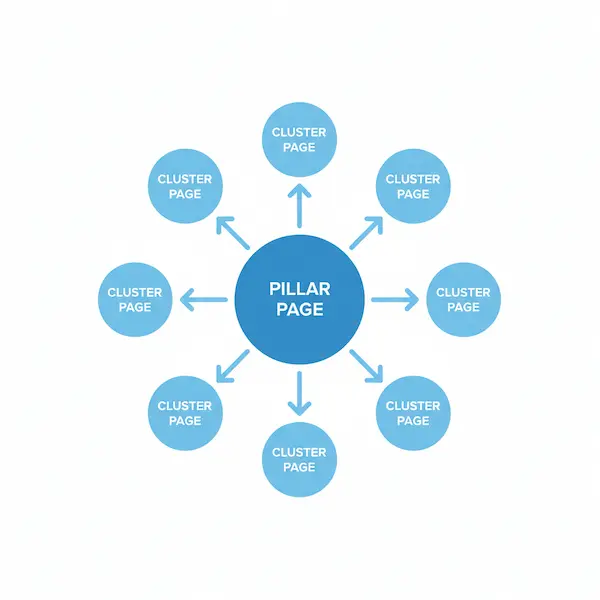
Understanding the cluster approach
Topic clusters represent a fundamental shift from targeting individual keywords to creating interconnected content ecosystems. The structure centers around a pillar page that covers a broad topic comprehensively while being supported by cluster pages that explore specific subtopics in detail. This hub-and-spoke model mirrors how users actually search for information and how search engines understand content relationships.
The strategy recognizes that Google evaluates context rather than just keyword density. Search engines now use semantic understanding to analyze how content relates to broader topics and whether websites demonstrate genuine expertise across subject areas. This evolution means that isolated pages targeting single keywords struggle to compete against comprehensive topic coverage.
Building effective content clusters
Creating successful topic clusters begins with identifying a broad core subject that aligns with your business objectives and audience needs. The pillar page should target high-volume keywords while providing enough scope to support multiple subtopic pages. For example, a pillar page about email marketing could support cluster pages covering automation tools, subject line optimization, and segmentation strategies.
Keyword research takes on new dimensions when planning clusters. Instead of finding individual high-volume terms, focus on discovering semantic keyword families that naturally group together. Long-tail keywords become particularly valuable as they often represent specific user intents that cluster pages can address comprehensively.
The content structure requires careful planning where each cluster page targets specific subtopics while maintaining clear relationships to the central theme. Internal linking serves as the backbone connecting all elements, with the pillar page linking out to relevant cluster content and cluster pages linking back to establish topical hierarchy.
SEO advantages of the cluster model
Topic clusters offer multiple SEO benefits that individual keyword strategies cannot match. Improved crawlability results from clear site architecture where search engines can easily understand content relationships and discover new pages through internal link pathways. This structured approach helps search engines recognize the depth and breadth of your expertise on specific topics.
User experience improvements naturally emerge from organized content structures. Visitors can navigate logically through related information, increasing engagement metrics like time on site and pages per session. These positive user signals reinforce search engine confidence in your content quality and relevance.
The model also creates multiple ranking opportunities from single topic investments. While individual keyword targeting limits visibility to specific search terms, topic clusters can rank for hundreds of related queries as search engines recognize comprehensive coverage. This amplification effect provides better return on content investment.
Implementation strategies
Successful cluster implementation requires strategic content planning that maps user journey stages to appropriate content types. Pillar pages typically address awareness-stage queries while cluster pages can target consideration and decision-stage searches. This alignment ensures comprehensive funnel coverage while maintaining topical coherence.
Content depth becomes crucial for establishing authority within clusters. Superficial coverage across multiple subtopics performs worse than comprehensive exploration of fewer areas. Each piece should provide genuine value and unique insights that demonstrate expertise rather than simply targeting search volume.
Regular cluster auditing and expansion keeps content networks current and comprehensive. Use analytics data to identify high-performing cluster pages that could support additional subtopic content, and monitor search console data for related queries that suggest new cluster opportunities.
Measuring cluster success
Effective measurement goes beyond traditional keyword ranking reports to evaluate cluster-wide performance metrics. Track how pillar pages perform for broad queries while monitoring cluster page rankings for specific long-tail terms. The goal is seeing improved performance across the entire topic area rather than isolated keyword wins.
Internal link analysis reveals cluster health by showing how well content pieces connect and support each other. Strong clusters demonstrate clear link patterns between pillar and cluster content, with logical anchor text that reinforces topical relationships. This connectivity directly impacts how search engines understand and value your content network.
User engagement metrics across cluster content provide insights into how well your topic coverage serves actual user needs. Higher engagement rates across multiple cluster pages indicate successful topical authority establishment and suggest opportunities for further cluster expansion.
The shift toward topic clusters represents SEO evolution from technical optimization to genuine content strategy. Success requires understanding user needs comprehensively and creating content ecosystems that serve those needs better than individual pages ever could.
Example of topical cluster
Pillar page
- Content marketing basics – a complete guide to effective strategies
Cluster pages (supporting articles)
- How to write engaging blog posts
- SEO fundamentals for content creators
- Building an email list to drive traffic
- Social media promotion techniques
- Measuring content marketing ROI
Each cluster page is thematically linked to the pillar page and interlinked with others, strengthening internal linking and boosting the authority of the entire topic cluster.


