
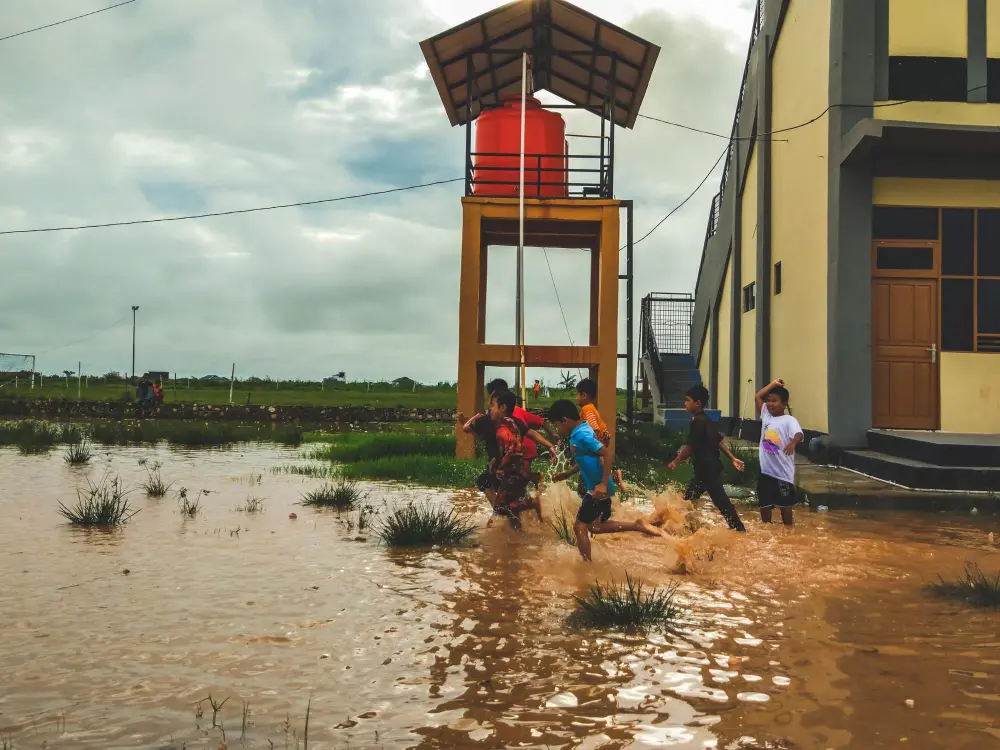
Typhoon Kajiki hits Vietnam
Typhoon Kajiki made landfall in central Vietnam on August 25, 2025, bringing winds of up to 166 km/h (103 mph). The storm caused at least three fatalities and injured over a dozen people. Nearly 7,000 homes were damaged, and about 28,800 hectares of rice fields were flooded. In Hanoi, streets were submerged, and power outages affected several provinces, including Thanh Hoa, Nghe An, Ha Tinh, Thai Nguyen, and Phu Tho.
The Vietnamese government evacuated over 500,000 residents from high-risk areas, and airports in Thanh Hoa and Quang Tri provinces were temporarily closed due to the storm’s impact. Emergency teams worked tirelessly to provide aid, focusing on shelter, food, and medical support.
Regional flooding and displacement
The flooding extends beyond Vietnam, affecting multiple Southeast Asian nations during the 2025 monsoon season.
Laos and Thailand
In Laos, particularly Khammouane province, July floods caused significant damage, including one confirmed death and losses exceeding 108 billion Lao kip (approximately $6.5 million USD). Thailand experienced flash floods and landslides in several provinces, disrupting transportation and communication networks.
Myanmar and the Philippines
Myanmar has faced intense flooding and landslides, displacing numerous families and straining local relief efforts. In the Philippines, the southwest monsoon has worsened flooding, leading to flash flood warnings and evacuations in vulnerable communities. Relief organizations such as Save the Children and UNICEF have mobilized to provide essential support, including food, water, and emergency shelter
Humanitarian challenges
The ongoing floods have led to multiple humanitarian challenges across the region.
- Displacement - thousands of families have been forced to leave their homes, relying on temporary shelters and emergency aid.
- Infrastructure damage - roads, bridges, and power lines have been destroyed or rendered unusable, complicating relief operations.
- Health risks - stagnant floodwaters increase the risk of waterborne diseases, while overcrowded shelters make it difficult to prevent illness.
- Child welfare - nearly six million children are affected by the floods, with many facing interrupted education and heightened vulnerability to exploitation.
Climate change implications
Experts warn that climate change is exacerbating extreme weather events in Southeast Asia. Rising sea levels, higher temperatures, and increased rainfall contribute to more frequent and severe floods and storms. Governments and international organizations emphasize the need for long-term investments in climate resilience, improved flood management, and disaster preparedness to mitigate future risks
Response and recovery efforts
Relief organizations have mobilized rapidly to provide emergency assistance, including food, clean water, medical aid, and temporary shelter. Governments are also focusing on restoring infrastructure, evacuating residents in high-risk areas, and coordinating with international partners to enhance disaster response capabilities. Community engagement and global support remain critical to help affected populations recover and build resilience against future disasters.


