
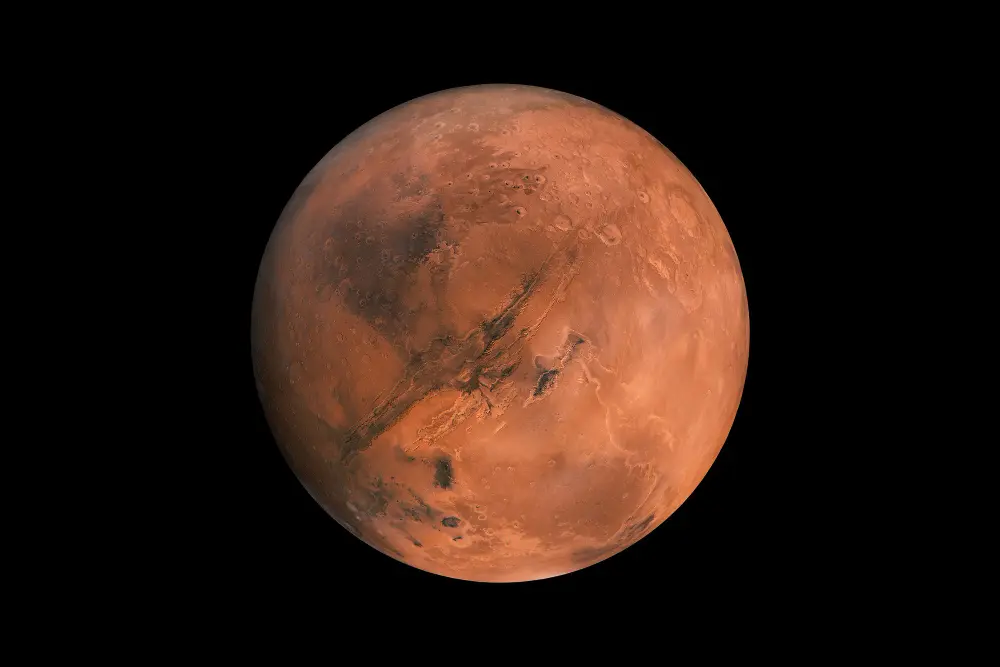
Mars Sample Return mission updates
The Mars Sample Return (MSR) program remains a cornerstone of NASA’s Mars exploration strategy. In early 2025, the agency announced updated plans to streamline sample retrieval from Mars. Two approaches are being considered:
- Sky Crane Technique - leveraging the technology successfully used by the Curiosity and Perseverance rovers.
- Commercial Capabilities - partnering with private companies, such as SpaceX, to utilize Starship for sample transport.
NASA aims to retrieve Martian samples between 2035 and 2039, several years ahead of the original 2040 timeline. Mission design is expected to be finalized by the end of 2026, reflecting NASA’s commitment to accelerating Mars exploration while managing costs and technical risks.
ESCAPADE mission to study Mars’ atmosphere
The ESCAPADE (Escape and Plasma Acceleration and Dynamics Explorers) mission, set to launch aboard Blue Origin’s New Glenn rocket in late 2025, will investigate Mars’ upper atmosphere. The mission includes two small spacecraft, named Blue and Gold, designed to measure atmospheric escape, plasma dynamics, and magnetic interactions. ESCAPADE is part of NASA’s SIMPLEx program and is scheduled to arrive at Mars in September 2027, providing valuable data for future missions.
CHAPEA analog missions simulate life on Mars
NASA’s Crew Health and Performance Exploration Analog (CHAPEA) program continues to prepare astronauts for long-duration missions. In October 2025, a new crew will enter the Mars Dune Alpha habitat at the Johnson Space Center in Houston, Texas.
This 1,700-square-foot, 3D-printed habitat replicates Martian conditions, including isolation, limited resources, and communication delays. Researchers will monitor physical and psychological responses to the simulated environment, studying factors critical for sustaining human life on Mars. Analog missions like CHAPEA are essential for identifying potential risks and designing effective countermeasures for future crewed missions.
Accelerated mission timeline and strategic collaboration
In May 2025, NASA announced potential acceleration of Mars mission launches, with preliminary schedules targeting as early as 2026. This shift follows increased funding, including a $1 billion allocation for Mars-related projects, and emphasizes collaboration with international partners.
Private-sector involvement, particularly SpaceX’s Starship program, could enhance launch capabilities and reduce costs. However, technical challenges remain, including spacecraft reliability, interplanetary navigation, and planetary protection measures. The accelerated timeline reflects NASA’s strategic balance of innovation, risk management, and international cooperation.
Implications for human exploration
These 2025 Mars initiatives mark a significant step toward eventual human missions. Sample return missions provide critical scientific insight, while atmospheric studies like ESCAPADE inform landing and habitat safety. Analog programs ensure astronauts are prepared for the unique physical and psychological challenges of life on Mars.
The integration of public and private capabilities, along with international collaboration, underscores a growing trend in space exploration. By combining innovation, expertise, and global partnership, NASA aims to ensure the success and sustainability of future Mars missions.


