
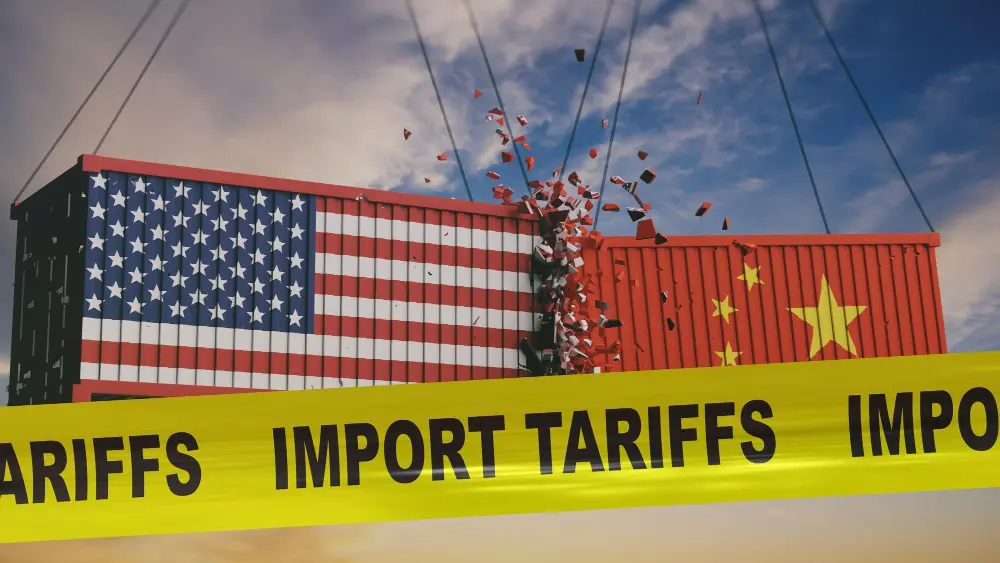
Chinese negotiator visits Washington
Senior Chinese trade negotiator Li Chenggang traveled to Washington in late August 2025 for informal discussions with U.S. officials. This marked his first visit to the United States since high-level negotiations resumed in 2023. While no official meeting with the U.S. Trade Representative Jamieson Greer was scheduled, the discussions focused on reducing trade barriers, addressing unfair practices, and improving access to sensitive technologies.
The visit occurred amid a 90-day tariff truce aimed at preventing a full escalation of the trade war. Chinese officials emphasized the importance of maintaining open channels of communication to avoid destabilizing the bilateral relationship.
US considers additional tariffs
U.S. leadership has signaled a willingness to use tariffs strategically to protect domestic industries. President Donald Trump warned that the United States possesses “incredible cards” capable of severely impacting China’s economy. Among the proposed measures is a potential 200% tariff on Chinese rare-earth magnets, which are essential for advanced technology and defense sectors.
At the same time, the existing tariff truce has been extended, maintaining current rates of 30% on Chinese imports and 10% on American exports. These measures reflect ongoing efforts to balance enforcement of trade laws with the need to avoid a full-scale trade conflict.
Addressing trade inequalities
A major focus of the discussions is correcting unequal trade practices. The United States has implemented additional tariffs and export controls on critical materials such as rare-earth elements. These actions are designed to protect domestic manufacturing and technological leadership.
In response, China has taken countermeasures, including bureaucratic obstacles and export restrictions, highlighting the delicate balance between competition and cooperation. Both nations recognize that missteps could have far-reaching consequences for global markets.
Potential high-level summit
Looking ahead, President Trump is considering a meeting with Chinese President Xi Jinping during the upcoming APEC summit in Asia. Such a summit could provide a platform for addressing major trade and technological issues, including semiconductor access, rare-earth resources, and digital trade regulations. Analysts note that while the possibility of cooperation exists, uncertainty about policy direction remains high.
Economic and global implications
The trade discussions between China and the U.S. have significant implications for global markets. Tariff adjustments and export controls can affect supply chains, technology sectors, and commodity prices. Industries reliant on rare-earth materials, semiconductors, and high-tech components are particularly sensitive to shifts in trade policies.
Investors and policymakers worldwide are closely monitoring these developments. The potential for escalation or compromise in trade relations will influence market confidence, investment strategies, and economic growth forecasts. Both nations face pressure to safeguard domestic interests while ensuring global economic stability.


